
Hot Keywords:
- All
- Product Name
- Product Keyword
- Product Model
- Product Summary
- Product Description
- Multi Field Search
Please Choose Your Language
Views: 0 Author: Site Editor Publish Time: 2026-06-02 Origin: Site


Deciding between a 22-foot and a 25-foot hull marks a critical tipping point in your buying journey. Three feet of deck space dictates fundamentally different ownership experiences. This choice impacts much more than your final passenger count. It alters your horsepower requirements, towing vehicle demands, dock slip compatibility, and rough-water handling.
Many buyers focus solely on maximizing deck space. They often overlook how hull length affects daily logistics. A larger hull changes how you store, tow, and maneuver on the water. We built this guide as an objective, evidence-based evaluation framework. It will help you match your lifestyle, water conditions, and logistical realities to the correct length.
You will learn how each size behaves in tight coves versus open bays. We also cover practical constraints like truck payload capacities and marina slip dimensions. This ensures you buy the perfect size for your real-world needs.
The 22ft Sport Tritoon Pontoon Boat is the agility-focused standard, offering easier trailering, better fit for standard docks, and lower baseline horsepower requirements.
The 25ft Sport Tritoon Pontoon Boat excels in capacity and rough-water stability, bridging wave gaps effortlessly, but requires a higher budget for engine upgrades (250HP+) and storage.
A "sport pontoon boat" (featuring triple tubes/lifting strakes) performs significantly differently than a standard twin-tube pontoon boat; choosing the right length maximizes this sport-handling capability.
Final selection should be reverse-engineered from your specific constraints: tow vehicle capacity, local slip dimensions, and typical passenger load (not aspirational capacity).
Buyers frequently get stuck in this specific size bracket. It represents a major transition point. You move from standard recreational use into high-capacity, high-performance boating. Manufacturers target this range because it appeals to most families. However, the three-foot gap creates entirely different operational realities.
You must understand the baseline difference before comparing lengths. A sport tritoon handles differently than a standard Pontoon Boat. Standard models use two outer tubes. They displace water and cruise slowly. A sport tritoon adds a third center tube. It also includes lifting strakes and aluminum under-deck skinning. The strakes act as wings underwater. They push the hull upward. The underskinning reduces drag from exposed crossmembers. These features make watersports possible. They allow the hull to achieve a true plane. Length changes exactly how the hull achieves this plane.
Boaters often face the "two-footitis" dilemma. This refers to the common regret of buying a smaller size to save money. Many buyers immediately wish they bought a larger model. Forums feature endless posts about this regret. However, you must balance this fear against reality. Buying more boat than necessary creates logistical headaches. Extra length makes towing stressful. It limits where you can dock. You must evaluate your true needs to avoid both extremes.
Three feet of extra aluminum might sound minor. On the water, it completely transforms your deck layout. Manufacturers use this extra space strategically. They do not just stretch the existing seats.
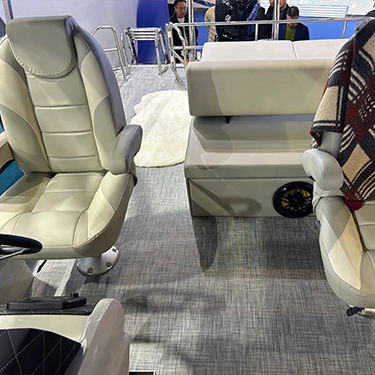
If you purchase a 22ft Sport Tritoon Pontoon Boat, you face specific capacity realities. These models are typically rated for 10 to 12 passengers. They perform best for families of four to six people. This leaves room to occasionally bring guests. The layout features standard seating configurations. You will not feel cramped. However, you face spatial limits. You rarely find room for dual oversized rear loungers and expansive bow seating simultaneously. You usually have to compromise on one end of the deck.
Moving up to 25 feet unlocks entirely new floorplans. These larger models are typically rated for 13 to 15 passengers. The extra space allows manufacturers to create distinct zones. You can have a dedicated entertainment galley. You can include massive rear-facing loungers. You still keep an expansive bow seating area. People can move around freely without stepping over each other.
You must avoid the "max capacity illusion" during your evaluation. A 25ft model might technically fit 15 people. That does not mean you should always load it fully. Weight distribution severely impacts sport performance. Putting eight adults in the bow will plow the nose into waves. It ruins your turning radius. Buy for your typical weekend load, not your rare holiday party.
Capacity and Layout Comparison
Feature | 22-Foot Models | 25-Foot Models |
|---|---|---|
Typical Max Capacity | 10–12 Passengers | 13–15 Passengers |
Optimal Comfort Load | 4–8 People | 8–12 People |
Layout Flexibility | Standard L-shape or single lounger | Multi-zone, dual loungers, bar areas |
Storage Volume | Moderate under-seat storage | Extensive storage for large water toys |
Performance changes drastically when you add three feet of metal. You increase the wetted surface area. This creates more hydrodynamic drag. You must adjust your horsepower expectations accordingly.
A 22ft model hits the sport performance sweet spot easily. You can equip it with a 150HP to 200HP outboard. This setup provides excellent acceleration. It offers an agile turning radius. You can quickly circle back to pick up downed wakeboarders. The hull responds sharply to steering inputs. It feels lively and fun to drive.
If you choose a 25ft Sport Tritoon Pontoon Boat, you need significantly more power. The added weight demands a larger engine. You need 250HP to 300HP or more to achieve identical sport characteristics. Putting a 150HP engine on a 25ft hull results in sluggish performance. It will struggle to jump onto plane when fully loaded. Your turning radius widens considerably.
Your local water body should dictate your choice. Deep, rough waters favor longer hulls. Big lakes produce heavy chop. A 25ft model spans the crests of these waves better. It bridges the gaps effortlessly. This provides a noticeably smoother and drier ride. A 22ft model might dip into the wave troughs, causing spray.
Shallow lakes and narrow rivers favor shorter hulls. A 22ft model offers marginally better maneuverability. You can navigate tight coves easily. Draft depth remains relatively similar across both sizes. The static float level depends on tube diameter, not length. However, the physical footprint of a 25ft boat makes navigating narrow channels riskier. You need more room to pivot around stumps or sandbars.
Performance Scaling Chart
Performance Metric | 22-Foot Hull Response | 25-Foot Hull Response |
|---|---|---|
Agility & Turning | Sharp, tight radius (excellent for towing) | Wider, sweeping turns (better for cruising) |
Minimum HP for Plane | 115HP – 150HP | 200HP – 250HP |
Rough Water Ride | Adequate, follows wave contours | Superior, bridges wave gaps smoothly |
Evaluating a new sport pontoon boat requires looking beyond the water. Land-based logistics often ruin the ownership experience. You must match the vessel to your existing infrastructure.
Your tow vehicle requirement changes significantly. A fully loaded 22-footer typically sits safely within modern half-ton truck capacities. The boat, motor, trailer, and fuel usually weigh between 5,000 and 6,000 pounds. Most standard SUVs and half-ton pickups handle this easily. The wind drag profile remains manageable at highway speeds.
A 25-footer demands a heavier towing setup. The total package often pushes into the 6,500 to 7,500-pound range. You will need a heavy-duty tandem or tri-axle trailer. While a half-ton truck might technically pull it, highway transport becomes stressful. Crosswinds catch the massive aluminum side panels. The extra trailer length increases sway risks. You often need a 3/4-ton truck for safe, relaxed highway towing.
Dock slips and Homeowner Association (HOA) rules introduce strict barriers. Many standard marina slips cap out at 24 feet. Residential community docks often share this limitation. A 25ft boat may measure 27 feet overall once you include the outboard motor. This forces buyers into expensive commercial slips. You might face long waitlists for oversized spots.
Implementation risks extend to winterizing and storage facilities. Indoor storage locations charge by the linear foot. Shrink wrapping companies use the same pricing model. The jump from a 22ft to a 25ft rig triggers a disproportionate hike in annual maintenance bills. You pay more for storage, cleaning, and eventual tube polishing.
You need a logical way to finalize your choice. Determine which Sport Pontoon Boat fits your specific daily routine. Review the criteria below.
Your primary goal is aggressive watersports. You enjoy tubing and skiing. You need a tighter turning radius to retrieve riders safely.
Your typical passenger load stays at eight people or fewer. You do not regularly host large dock parties.
You plan to trailer the rig frequently. You visit different inland lakes every weekend.
You are restricted by standard 24-foot slip sizes. You prefer towing with a standard half-ton pickup truck.
You operate primarily on large, choppy lakes or open coastal bays. You need the extra length to smooth out heavy waves.
The vessel will act as a stationary entertainment platform. You often anchor at sandbars with ten or more adults.
You keep the vessel on a permanent lift. You rarely move it on a trailer.
You have the budget for a high-output outboard engine. You are prepared to invest in a 250HP to 300HP motor.
The choice between a 22ft and 25ft hull is rarely just about purchase price. It revolves entirely around logistical capacity and environmental demands. Three extra feet provide incredible comfort and stability. However, they demand more horsepower, larger tow vehicles, and deeper storage pockets.
We recommend defaulting to the 22ft size for its versatility. It offers an easier ownership experience. It fits better into standard garages, marinas, and daily routines. You should only step up to the 25ft tier if you frequently navigate rough waters. It also makes sense if you routinely entertain double-digit guest lists.
Your next steps require precise measurements. Measure your home dock or local marina slip exactly. Verify your specific tow vehicle’s Gross Combined Weight Rating (GCWR) inside the driver's door panel. Finally, schedule a wet-test in choppy conditions. You need to feel the turning radius difference firsthand before signing any paperwork.
A: Yes. The triple-tube setup provides excellent buoyancy and lateral stability. This makes a 22ft tritoon highly capable in moderate chop. The lifting strakes help the bow stay above the waves. However, it will not bridge large wave gaps as smoothly as a longer 25ft model. You may experience more spray in heavy wind.
A: It depends heavily on your truck's specific tow package. While modern half-ton trucks sometimes boast 10,000-pound ratings, weight is not the only factor. The massive wind-drag profile and sheer length of a 25ft trailer cause significant highway sway. Upgrading to a 3/4-ton truck provides a much safer towing experience.
A: The static draft is relatively identical. Both sizes usually draw 14 to 16 inches of water for the tubes, plus the engine skeg. However, the 25ft length requires a significantly wider turning radius. This makes maneuvering out of shallow, stump-filled coves much harder compared to an agile 22ft model.


