
Hot Keywords:
- All
- Product Name
- Product Keyword
- Product Model
- Product Summary
- Product Description
- Multi Field Search
Please Choose Your Language
Views: 0 Author: Site Editor Publish Time: 2026-08-01 Origin: Site


The modern pontoon is no longer the sluggish "party barge" of the past. Today’s premium models rival fiberglass cruisers in sheer performance. They also easily outclass them in usable deck space. Buyers evaluating the high-end boating market often face a difficult choice. They struggle to decide between a luxury vessel, a deck boat, or a traditional bowrider. Making the right decision can feel overwhelming given the sheer number of options. A successful purchase requires careful alignment of several critical factors. You must match hull performance, specifically tritoon setups, to your local waterways. You also need to evaluate interior layouts and overall build quality based on your specific entertainment needs. Geographic location plays a massive role in this decision process. In this guide, we will explore exactly what separates premium models from entry-level vessels. You will learn how to evaluate key construction components, choose the correct hull size, and navigate the physical realities of long-term ownership.
Performance Evolution: High-end models utilize triple-tube (tritoon) architecture and under-deck skinning to handle 300+ horsepower and rougher water conditions.
Use-Case Alignment: Selecting the right boat hinges on matching the deck layout to primary activities (e.g., watersports, stationary entertaining, or long-distance lake cruising).
Ownership Realities: While they offer unmatched comfort, buyers must account for the logistical realities of trailering wide-beam vessels and securing adequate slip space.
Traditional pontoon boats follow a very simple design philosophy. Manufacturers bolt a basic plywood deck across two hollow aluminum tubes. These standard models prioritize calm water cruising and basic relaxation. They typically feature low-horsepower outboard engines. Drivers cannot make sharp turns safely at high speeds. The two-tube design causes the boat to lean outward during turns. This outward lean makes the ride feel unstable in choppy waters. Standard models also lack advanced structural reinforcements. They serve perfectly well for small, quiet lakes. However, they struggle in larger bodies of water.
The modern Luxury Pontoon Boat relies heavily on a three-tube architecture. The industry calls this a tritoon setup. Builders add a massive center tube running the full length of the deck. This center tube often sits slightly lower than the outer tubes. This specific geometry creates a pivot point. It allows the vessel to bank inward during tight turns, mimicking a traditional fiberglass V-hull. Manufacturers also weld lifting strakes to the sides of these tubes. Lifting strakes force the hull upward as speed increases. This reduces drag and improves fuel efficiency. High-end models also feature performance wave shields. These aluminum sheets cover the exposed crossmembers under the deck. They prevent surging water from hitting the structural beams, ensuring a remarkably smooth ride.
This premium category caters to a specific demographic. High-net-worth families often choose them as their primary lake vessel. Multi-generational households appreciate the stable, flat deck. The single-level layout removes tripping hazards for young children and older adults. Retirees prioritize the incredibly smooth ride and easy boarding access. These vessels easily accommodate 10 to 15 passengers. They provide premium amenities like wet bars and loungers without sacrificing speed. You can entertain a large group in the morning and wakeboard behind the same boat in the afternoon.
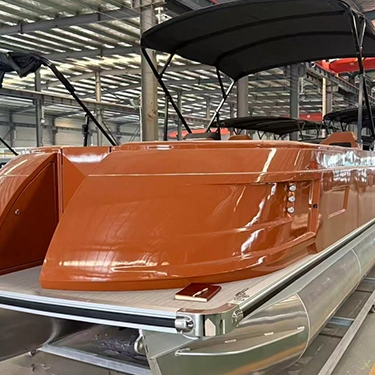
You must look beneath the deck to judge true quality. Premium builders use tightly spaced crossmembers. Look for crossmembers spaced 16 inches apart or less. Tighter spacing prevents the deck from flexing in heavy waves. You should also evaluate the thickness of the aluminum tubes. High-quality models use .090" or .100" aluminum gauges. Thicker aluminum resists dents from floating debris and dock impacts. Fully sealed motor pods represent another critical engineering upgrade. These sealed compartments protect the engine mounting structure from water intrusion. They provide long-lasting durability.
The driver's experience has transformed dramatically over the last decade. Analog gauges have largely disappeared from top-tier models. Today, flush-mounted dual glass dash displays dominate the helm. Systems from Garmin or Simrad provide GPS mapping, sonar, and engine diagnostics in one clean interface. Digital throttle and shift (DTS) replaces stiff mechanical cables. DTS delivers buttery-smooth shifting and precise RPM control. Buyers should also expect hydraulic or joystick steering. Joystick piloting makes docking incredibly intuitive, even for beginners. Many brands also elevate the fiberglass helm platform by several inches. This simple elevation gives the captain clear visibility over passengers sitting in the front loungers.
Comfort dictates the design of the interior space. Modern Pontoon Boat Features include marine-grade vinyl engineered for longevity. The newest materials feature "cool-touch" technology. This prevents dark-colored seats from burning skin on blistering summer days. Power-folding bimini tops have become an industry standard. You can deploy or retract the shade canopy using a single switch. Integrated RGB lighting zones allow owners to customize the mood. You can sync under-deck lighting, cupholder rings, and speaker grilles to specific colors. Premium multi-zone audio systems deliver concert-quality sound. You can control volume levels independently for the bow, stern, and helm areas.
Manufacturers design specific furniture layouts for different lifestyles. The quad-bench seating arrangement maximizes socializing. It places long benches in all four corners of the deck. Rear-facing loungers remain incredibly popular for sandbar days. These massive aft beds allow guests to comfortably watch swimmers in the water. Entertainment bar layouts feature high-top counters and swivel barstools. Some builders even integrate small galleys into the bar area. These galleys include freshwater sinks, built-in coolers, and dedicated trash receptacles. You must select the layout most suited to your daily routine.
Below is a quick reference summary of premium features.
Category | Standard Entry-Level Feature | Premium Luxury Upgrade |
|---|---|---|
Hull Structure | Two 23-inch tubes | Three 25-inch to 27-inch tubes |
Deck Supports | 24-inch crossmember spacing | 16-inch or 12-inch crossmember spacing |
Steering | Mechanical cable | Hydraulic or Joystick piloting |
Dash Interface | Analog dials and toggle switches | Dual flush-mounted touchscreens |
Canopy Control | Manual push-button frame | Power-folding electronic bimini |
Choosing the right length requires balancing passenger capacity against physical footprint. A 23ft Party Pontoon Boat represents the sweet spot for many families. It provides ample deck space without feeling overly cumbersome.
Capacity: This size class comfortably seats 10 to 12 passengers. Everyone has enough legroom to stretch out.
Handling: Shorter hulls excel in tight quarters. They maneuver easily in narrow coves and small marinas. You can turn around in smaller channels effortlessly.
Logistics: A 23-foot vessel is significantly easier to trailer. It fits standard residential driveways more comfortably. It also matches the weight limits of most standard boat lifts.
Upsizing to a larger chassis changes the entire boating experience. A 25ft Aluminum Pontoon Boat provides massive entertaining capabilities. However, it demands more respect regarding handling and logistics.
Capacity: These models legally seat 14 or more adults. They offer sprawling deck space. You can host large family reunions or massive dock parties easily.
Handling: The extended length bridges larger waves. The hull spans the distance between wave crests. This prevents the bow from dipping into the troughs. It provides a significantly smoother ride on big, choppy lakes or coastal intercoastal waterways.
Logistics: Ownership logistics become more complex. You often require heavy-duty towing setups. You may need a heavy-duty pickup truck to pull the rig safely. You must also secure oversized marina slips. Standard boat lifts usually require custom modifications to handle the extra length and weight.
Sizing Comparison Chart
Specification | 23-Foot Class | 25-Foot Class |
|---|---|---|
Passenger Capacity | 10-12 Adults | 14+ Adults |
Rough Water Handling | Moderate | Excellent |
Trailering Difficulty | Manageable | Advanced |
Marina Slip Requirement | Standard Slip | Oversized Slip |
Driving on open water feels incredibly relaxing. However, docking presents unique challenges. You must understand the "sail effect." Pontoons sit very high on the water. They feature tall aluminum side panels called fencing. These panels catch the wind like a massive sail. Crosswinds will push the bow off course during slow-speed docking maneuvers. Drivers need significant practice to master docking in windy conditions. You must learn to use the throttle aggressively to counter wind gusts. Alternatively, you can invest in joystick piloting. This system independently vectors the outboard engines. It allows you to move the boat completely sideways into a tight slip.
Buyers frequently underestimate trailering requirements. You cannot simply look at the manufacturer's published dry weight. You must emphasize the true "wet weight." The wet weight includes the hull, the massive outboard engine, and a full tank of fuel. It also includes anchors, coolers, batteries, and safety gear. Add the weight of the steel trailer itself. A loaded premium tritoon easily exceeds 5,000 pounds. Towing this weight requires an appropriately rated tow vehicle. The wide beam also creates towing challenges. The boat measures 8.5 feet across. It obstructs rear-view mirrors and requires wide turns at intersections. You need towing experience to transport these vessels safely over long distances.
Many buyers praise aluminum hulls for their low maintenance profile. The tubes do not require seasonal fiberglass waxing. However, premium amenities require constant attention. High-end vinyl interiors demand strict UV protection. Sun exposure degrades the soft vinyl over time. You must apply marine-grade UV conditioners monthly. You must also use tight-fitting mooring covers diligently. Covers prevent bird droppings, mold, and spider droppings from ruining the seats. A dirty cover can ruin your luxury investment quickly. The massive aluminum tubes also collect waterline scum. You will need to pressure wash or acid wash the pontoons occasionally to keep them looking pristine.
Navigating the dealership floor requires a clear strategy. Follow these proven steps to narrow down your choices efficiently.
Define the Waterway: Your local geography dictates hull requirements. Are you boating on a small, calm, 500-acre lake? A standard bi-toon might suffice perfectly. Are you navigating a massive, choppy reservoir like Lake Mead or Lake of the Ozarks? A performance tritoon with wave shields becomes strictly mandatory. Do not compromise on hull architecture if your lake gets rough in the afternoons.
Establish Capacity: Count your frequent passengers. Do not count your occasional guests. Buyers frequently make the mistake of over-buying length. They buy a 27-foot boat for a family reunion that happens once a year. If you usually boat with just your spouse and two children, a 23-foot model works perfectly. Over-buying length makes everyday docking and trailering unnecessarily difficult.
Evaluate Dealership Support: A luxury vessel requires premium service. Prioritize brands backed by highly-rated local dealer networks. You will need routine maintenance, engine winterization, and potential warranty support. A great boat sold by a terrible dealership will ruin your ownership experience. Ask local boaters about their service center experiences before committing to a brand.
The Wet Test: Never buy a boat strictly off the showroom floor. You must mandate a "wet test" before signing any paperwork. A wet test is a test drive on the water. You need to evaluate helm visibility firsthand. You must listen to engine noise levels at cruising speeds. Most importantly, you need to feel the rough-water handling yourself. Drive the boat across a heavy wake to see how the chassis reacts.
A premium tritoon represents a highly specialized investment in comfort and social capacity. It delivers surprisingly agile performance previously reserved for fiberglass hulls. You can confidently host a dozen friends while surfing heavy lake chop. Moving forward, focus your attention beneath the deck. Prioritize thick aluminum crossmembers, sealed lifting strakes, and large diameter tubes over flashy upholstery. Select a layout explicitly designed for your favorite weekend activities. Finally, remember your local dealer serves as your long-term partner. Choose a dealership known for exceptional maintenance and warranty support to ensure years of stress-free boating.
A: Yes. Modern luxury models handle rough water beautifully, provided they feature a triple-tube chassis. This tritoon setup must include lifting strakes and under-deck wave shields. Adequate length also matters. Hulls measuring 23 feet or longer can span wave crests efficiently, preventing the bow from dipping into deep troughs.
A: Yes, but they require preparation. You must order a specific saltwater package from the factory. This package includes sacrificial anodes to prevent galvanic corrosion. It also includes fully sealed lifting strakes and specialized anti-fouling bottom paint. Without these protections, saltwater will rapidly degrade the aluminum tubes.
A: Today’s models are incredibly fast. When equipped with a 300-horsepower outboard and a performance lifting package, many easily exceed 45 mph. Some specialized twin-engine models can reach speeds exceeding 60 mph. This speed makes them highly capable for pulling wakeboarders, skiers, and heavy towable tubes.


