
Hot Keywords:
- All
- Product Name
- Product Keyword
- Product Model
- Product Summary
- Product Description
- Multi Field Search
Please Choose Your Language
Views: 0 Author: Site Editor Publish Time: 2026-06-16 Origin: Site


Purchasing a pontoon boat is no longer just about deck size. Modern buyers face a dazzling array of specialized floor plans. You must match the layout to your primary on-water lifestyle to avoid post-purchase regret. Finding the perfect balance between fishing functionality and family cruising capacity can feel overwhelming at first.
A versatile Sport Pontoon Boat bridges this gap perfectly. It blends the nimble traits of specialized fishing rigs with the robust power of high-performance tow boats. You no longer have to choose strictly between utility and comfort.
For buyers actively searching for a sport pontoon boat for sale, evaluating seating configurations is critical. You must also review storage capacities and hull differences. Two-tube and tritoon setups behave entirely differently on the water. Analyzing these elements represents your crucial final step before contacting a dealer. You will learn exactly how to align these layout options to your unique needs.
Identify Your 80% Use Case: Choose a layout based on what you will do 80% of the time—do not sacrifice primary functionality for occasional activities.
Performance Dictates Layout: Watersports and heavy family entertainment require the buoyancy and horsepower capacity of a tritoon, whereas basic sightseeing can be achieved on standard twin-tubes.
Fishing vs. Lounging Trade-offs: True fishing layouts prioritize bow/aft casting clearance and livewells, which inherently reduces the footprint for wrap-around family seating.
Scalability: Evaluate floor plans based on future needs, factoring in weight capacities and helm electronics integration.
Many shoppers suffer from the classic buyer's dilemma. They want a single floor plan handling every possible activity perfectly. Attempting to find a layout mastering every task often results in a severely compromised deck plan. You end up owning a vessel feeling cramped during family parties and awkward during fishing trips.
To solve this, implement a strict decision framework based on the 80/20 rule. You should rank your priorities clearly. Structure your ranking around three core pillars:
Fishing: Requires open deck space and specialized stations.
Watersports & Entertainment: Demands high capacity, secure seating, and towing structures.
Sightseeing: Prioritizes maximum lounging comfort and conversational flow.
Capacity and flow considerations play a massive role in daily enjoyment. You must evaluate how traffic moves from the bow to the stern. A center walk-through provides better flow for large families. People can move freely without stepping over one another. Conversely, a side-console layout maximizes continuous seating. This setup works beautifully for sightseeing groups.
Avoid buying solely based on showroom aesthetic appeal. Visual charm rarely translates to practical utility. You must evaluate the hidden elements. Measure under-seat storage dimensions carefully. Check the bimini top coverage to ensure adequate shade. You should also measure gate widths for dock accessibility, especially if you carry large coolers frequently.
Layout Flow Type | Best Use Case | Traffic Impact |
|---|---|---|
Center Walk-Through | Active families, watersports | Unrestricted movement bow to stern |
Side-Console Aisle | Sightseeing, relaxing cruises | Creates larger continuous seating zones |
Aft-Focus Walkway | Fishing, swimming access | Directs traffic toward the rear swim deck |
Dedicated anglers often feel overlooked by modern family boat designs. Fortunately, hybrid solution categories exist. Four-point or aft-fishing layouts offer a brilliant compromise. These designs feature pedestal seats mounted just outside the main playpen fencing. Builders combine these external casting decks with mid-ship L-shaped loungers inside the fence.
Understanding the implementation realities helps you set proper expectations. Every layout carries distinct advantages and distinct limitations.
Pros: You gain dedicated casting zones. Integrated aerated livewells keep your catch healthy. Locking rod storage keeps expensive gear safe without cluttering the family lounging area.
Cons: This configuration inherently reduces the maximum passenger capacity. You lose the massive seating volume found on full quad-lounger models.
If you want the ultimate balance, look toward specialized configurations. A 23ft Party Leisure Fishing Pontoon Boat hits the sweet spot perfectly. The chassis is long enough to separate the aft fishing station from the forward party zone. Yet, it remains nimble enough for precise trolling along rocky shorelines.
Here is an evidence-oriented tip for your search. Look exclusively for vinyl or woven flooring options rather than traditional carpet. Anglers frequently track fish blood, slime, and lake water onto the deck. Woven flooring allows for rapid cleanup using a simple washdown hose. Carpet traps odors and stains permanently.
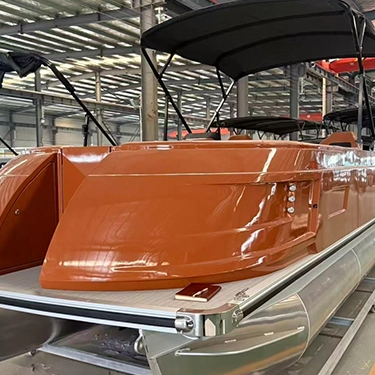
Families focusing heavily on active water days need robust solutions. The ideal category features quad-seating or U-shaped stern layouts. Quad-seating places four wrap-around couches in the corners. U-shaped designs often incorporate rear-facing loungers. These rear-facing seats give spotters a comfortable place to watch wakeboarders.
Active towing changes your performance requirements entirely. Towing inflatable tubes or adult wakeboarders demands specific hardware. You need a factory-installed ski tow bar. You also need an upgraded engine producing 150HP or more. Structural rigidity becomes paramount when handling these towing forces.
For heavy entertainment, a 25ft Sport Tritoon Pontoon Boat stands as the industry standard. The third center tube transforms the ride quality completely. It provides necessary lift and incredible stability in choppy wakes. Most importantly, it drastically increases the safe weight capacity for large extended families.
When evaluating these large vessels, scrutinize two critical dimensions closely:
Safety: Deep interior fencing keeps young children secure while underway. Ensure all gate latches require intentional, adult-level force to open.
Storage: In-floor ski lockers are mandatory for active families. These massive lockers only fit inside the center tube of a tritoon. They keep skis, ropes, and wet life jackets off the main deck, eliminating dangerous trip hazards.
Hull Configuration | Engine HP Range | Best Suited For |
|---|---|---|
Standard Twin-Tube | 50HP - 115HP | Light cruising, no towing |
Sport Twin-Tube | 115HP - 150HP | Occasional light tubing (kids) |
Performance Tritoon | 150HP - 300HP+ | Heavy towing, wakeboarding, full capacity |
Sometimes, the goal is simply pure relaxation on the water. If you prioritize sunset cruises over adrenaline, look for the dual helm seating solution. This layout features captain and co-captain high-back recliners positioned side-by-side. Builders pair these luxurious chairs with forward-facing bow loungers.
This design focuses entirely on the passenger experience. It thrives during sandbar hopping and leisurely afternoon rides. The dual helm setup encourages conversational seating. The captain never feels isolated from the group. You can chat easily while navigating quiet coves.
This specific blueprint absolutely dominates the Luxury Pontoon Boat segment. When browsing this category, expect highly refined touches. You will find premium, soft-touch upholstery. Manufacturers often hide pop-up changing rooms under the sun pads. Upgraded audio systems with zone controls come standard on these models.
However, supreme comfort introduces specific trade-offs. Forward loungers consume significant deck space. You gain incredible legroom, but you lose utility. You will find minimal room for casting fishing lines safely. Storing bulky watersport equipment becomes frustrating. If you bring giant inflatable tubes, they will likely sit awkwardly on the premium couches.
You must establish strict shortlisting logic before visiting a showroom. Knowing how to audit a dealer’s inventory saves immense time. Compare their available stock directly against your selected layout priority. Do not let a salesperson steer you toward a quad-lounger if you demand an aft-fishing station.
Hull configuration matching is your most critical technical check. You must validate if the layout’s intended use actually matches the chassis underneath it. For example, never buy a quad-lounger meant for 14 people mounted on a basic twin-tube chassis. Once fully loaded, it will sit too low in the water. Water will splash over the bow, ruining the ride.
Always verify compliance and safety metrics personally. Check the NMMA (National Marine Manufacturers Association) capacity plate mounted near the helm. This plate acts as the ultimate authority on safe operation. Ensure the stated layout supports your average passenger count. You must also factor in the massive weight of their coolers, gear, and fuel.
Your final action step requires getting on the water. Always request a wet test, also known as a sea trial. A boat layout feels vastly different when pitching on the water. Walking past a console on a stable showroom trailer feels easy. Walking past that same console while crossing a wake requires sturdy grab handles and wider aisles. Test the flow in real conditions.
The ideal layout acts as an honest reflection of your daily lifestyle, not your aspirational fantasies.
Whether you prioritize the aft-deck casting space of a 23ft fishing hybrid or the high-octane capacity of a 25ft sport tritoon, structure your decision around primary usage.
Finalize your non-negotiable features immediately. Decide if you must have an in-floor locker or dual helms today.
Calculate your realistic passenger and gear weight to determine if a tritoon is mandatory.
Establish these layout rules before browsing local inventory or speaking to a marine dealer. This preparation streamlines your purchasing process entirely.
A: No, hybrid layouts combining leisure and fishing hold strong resale value. They appeal to a broad demographic of families who enjoy casual weekend angling. However, strictly utilitarian fishing layouts featuring minimal seating may have a narrower secondary market than dedicated family entertainment models.
A: While aftermarket tow bars certainly exist, experts highly recommend purchasing a model featuring a factory-installed tow bar. The framing must be structurally integrated deep into the chassis. This factory integration handles the extreme torque of watersports safely without damaging the deck.
A: If you plan to carry more than 8-10 people regularly or tow adults on tubes, a tritoon is highly recommended. The third tube adds vital buoyancy, superior stability, and a higher maximum horsepower rating. Twin tubes generally remain sufficient only for calm-water sightseeing with smaller groups.


