
Hot Keywords:
- All
- Product Name
- Product Keyword
- Product Model
- Product Summary
- Product Description
- Multi Field Search
Please Choose Your Language
Views: 0 Author: Site Editor Publish Time: 2026-08-04 Origin: Site


Upgrading to or purchasing a luxury pontoon boat represents a significant capital investment for any family. This decision requires balancing high-end comfort against practical family safety and entertainment needs. The modern pontoon market has shifted dramatically away from basic aluminum barges. Builders now engineer high-performance, feature-rich vessels capable of tackling diverse marine environments. Families expect premium amenities, reliable handling, and expansive seating arrangements.
Selecting the right vessel demands a highly structured evaluation process. You must carefully review sizing rules, deck layouts, marine-grade materials, and performance capabilities. Jumping into a purchase blind often leads to compromised weekends on the water. Thorough research guarantees long-term satisfaction for your entire crew. You will successfully avoid over-purchasing unnecessary specs while securing the essential upgrades. This guide provides actionable frameworks to streamline your decision. You will learn exactly how to match luxury marine features to your specific boating lifestyle.
Size Dictates Experience: Choosing between a 21-foot agile cruiser and a 23-foot-plus entertainment vessel depends entirely on average passenger load and water conditions.
Layout is Critical: Floor plans and premium pontoon boat furniture must align with primary use cases (lounging, towing, dining).
Performance Matches Luxury: High-end finishes require adequate horsepower and structural support (often tritoon configurations) to maintain a smooth, safe ride under full loads.
Verify Build Quality: True luxury is found in sub-deck construction, marine-grade electrical routing, and comprehensive warranty coverage, not just superficial aesthetics.
Before browsing dealership showrooms, you must define your primary boating goals. Families routinely mix different activities on the water. However, you should identify one distinct primary use case. Do you prioritize relaxed sunset cruising? Will your family engage heavily in aggressive watersports like tubing or skiing? Perhaps you prefer stationary sandbar entertaining. Each specific activity demands unique deck layouts and varying engine capacities.
Next, you must evaluate passenger capacity versus actual comfort capacity. The USCG (United States Coast Guard) maximum rating dictates strict legal weight limits. It rarely reflects realistic seating comfort. A vessel rated legally for 12 people usually accommodates 8 to 10 adults comfortably. Coolers, gear bags, and water toys consume valuable deck space quickly. Do not base your final purchase solely on the legal capacity plate. Always plan for extra physical breathing room.
Finally, consider your local water body realities. Inland calm lakes allow for simpler structural baselines. Choppy coastal bays demand highly robust performance packages. Large open lakes require higher bow elevation and superior wave handling. You must match your boat strictly to the daily realities of your primary waterways. Ignoring wave patterns leads to uncomfortable, wet rides.
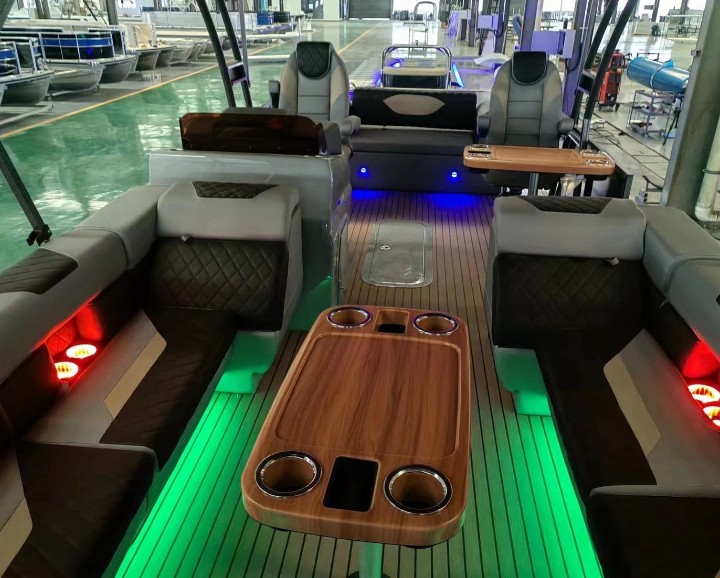
Deciding between a 21ft Luxury Pontoon Boat and a larger model permanently shapes your on-water experience. The agile 21-foot cruiser works exceptionally well for families of four to six people. These nimble boats excel on smaller, protected lakes. They make highway towing and tight marina docking much easier. However, they carry distinct limitations. You get significantly less deck space for dual-zone entertainment. They also handle only moderate water chop before the ride becomes rough.
Conversely, the 23ft Party Pontoon Boat serves as an ultimate entertainment hub. It suits multi-family outings perfectly. You can easily host 10 or more people simultaneously. These larger vessels dominate large water bodies effortlessly. They comfortably accommodate extensive luxury features like wet bars or massive dual-lounges. You must consider several physical trade-offs. A 23-foot boat requires a much larger marina slip. You need a heavy-duty tow vehicle. It also demands a higher horsepower engine to move the extra water displacement.
Apply the standard shortlisting rule during your preliminary search. Default to the larger size if your budget and storage footprint permit. Boaters frequently experience "two-foot-itis" shortly after purchase. This industry term describes regretting not buying a slightly larger boat. It remains the most common buyer remorse in the marine world. Extra deck space always proves valuable.
Understanding core layouts ensures everyone stays comfortable onboard during long trips. Builders offer several distinct configurations. The quad seating or L-group layout maximizes conversational space. It functions best for socializing and group dining. Rear-facing loungers (RFL) offer a completely different vibe. They provide ideal vantage points for safely watching swimmers or tubers. This layout prioritizes pure relaxation. Entertainment or bar layouts sacrifice some standard seating. They replace traditional benches in favor of high-top tables and food prep areas.
Layouts rely heavily on underlying material quality. Assessing Pontoon Boat Furniture separates true luxury models from basic builds. Examine the material science closely.
Foam and Vinyl: Look for multi-density foam. Insist on UV-resistant, antimicrobial vinyl like Soft-Touch materials.
Ventilation: Require ventilated storage bases to prevent aggressive marine mold growth.
Structural Bases: Always choose rotocast plastic bases over traditional wood. Wood rots over time in wet environments.
Ergonomics play a vital role in all-day comfort. Check the physical depth of the seats. Evaluate the angle of the backrests manually. Look for integrated armrests and deeply recessed cupholders. You should also verify clear durability indicators. Double-stitched seams handle harsh marine environments better. Heavy-duty aluminum hinges on under-seat storage compartments prevent premature mechanical failure.
Modern luxury vessels offer impressive helm and technology integration. Glass dash displays now replace nearly all traditional analog gauges. Systems from Garmin or Simrad provide superior navigation and engine data simultaneously. You should also prioritize digital throttle and shift (DTS) technology. DTS guarantees incredibly smooth handling and precise docking maneuvers.
Environmental controls dictate passenger comfort levels. Power-deployable Bimini tops offer effortless, instant shade management. Extended shade structures protect vulnerable passengers from intense afternoon sun. Zoned, marine-grade audio systems create immersive environments. Look for sound systems featuring dedicated subwoofers and tuned digital signal processors (DSPs). RGB interior and exterior lighting serves dual purposes. It enhances functional safety during evening cruises while boosting overall aesthetic appeal.
Buyers must distinguish expensive gimmicks from genuine long-term value. Evaluate options based strictly on realistic utilization rates. Carefully review Boat Features and Options before finalizing your dealer build sheet. A secondary freshwater sink might sit unused for years. Upgraded flooring, like woven marine vinyl, pays daily dividends. It drastically improves underfoot comfort and heavily simplifies end-of-day cleaning.
Feature Value Assessment
Feature Category | High-Value Investment | Common Gimmick |
|---|---|---|
Helm Technology | Digital Throttle & Shift (DTS) | Overly complex secondary screens |
Deck Flooring | Woven vinyl or SeaDek material | Traditional marine carpet |
Comfort & Shade | Power-deployable Bimini tops | Manual snap-on bow covers |
Entertainment | Zoned DSP audio systems | Built-in blenders or minor sinks |
The sub-deck chassis serves as the foundation of your boat. You must choose between bi-toon and tri-toon performance packages. True luxury usually necessitates a third pontoon tube (tritoon). This specific configuration dramatically increases buoyancy and lateral stability. It also safely allows for much higher horsepower ratings. Lifting strakes and underdeck skinning matter just as much. Strakes push the tubes up. Skinning deflects water downward. Together, they guarantee a notably quiet, dry ride.
Evaluate the Tubes: Ensure the aluminum thickness meets standard luxury marine grades.
Check the Strakes: Confirm they run the proper length of the pontoon logs.
Inspect the Skinning: Verify full-length aluminum sheeting under the deck.
Horsepower requirements scale directly alongside boat length and expected passenger load. You must perfectly match engine output to your specific chassis. A severely underpowered luxury boat negates the entire premium experience. It struggles to plane out and burns excessive fuel at high RPMs.
Safety and compliance require equal attention. Deep stainless-steel boarding ladders protect tired swimmers during re-entry. Heavy-duty railing heights keep children secure while underway. Secure gate locks for toddlers prevent accidental falls. Always verify USCG-approved navigation lighting and accessible safety gear storage.
Ownership logistics involve basic seasonal preparation. Set realistic expectations for keeping high-end materials pristine. Consider local winterization schedules and accessible shrink-wrap services. Most importantly, evaluate accessible dealer networks. A strong local dealer makes warranty claims and seasonal servicing effortless.
Finalizing your luxury pontoon decision requires stepping off the computer screen. You must get onto the physical deck. Never buy a premium vessel based purely on glossy brochures or online videos. Hands-on experience reveals critical ergonomic details.
First, schedule a comprehensive wet test or sea trial. Test a shortlisted 21-foot or 23-foot model directly on the water. Pay close attention to how the boat handles crosswinds. Listen carefully for irritating hull noise during choppy conditions. Evaluate the physical ergonomics of the captain's chair and helm.
Second, perform thorough local dealer vetting. Purchasing a luxury vessel starts a long-term relationship. Treat the initial purchase as a service partnership alongside your local dealership. Reliable service departments matter just as much as premium marine features. Quality dealer support keeps your boat on the water all summer.
A: Luxury models feature upgraded chassis construction, including thicker aluminum and standard tritoon packages. They utilize premium vinyl, multi-density foam, and advanced fiberglass helms. Integrated digital technology replaces basic gauges. These components result in a significantly quieter ride, superior handling, and a much longer vessel lifespan.
A: Yes, a 21-foot boat comfortably holds a family of five. You will also have room for a few extra guests. However, storage capacity for bulky water toys and large coolers will max out much faster than on a spacious 23-foot layout.
A: Mechanical maintenance remains identical to standard boats, depending entirely on the outboard engine. However, luxury upholstery, woven flooring, and advanced electronics require consistent preventative care. You must use UV covers and marine protectants regularly. This specialized care maintains their premium appearance and protects future resale value.


